Every summer, commercial electricity bills climb — and for sites with EV charging, the increase is sharper than most operators expect. The culprit usually isn't how much energy you used. It's the demand charge: the fee billed on your single highest 15-minute interval of power draw. In summer, that one number gets more expensive and more dangerous, and a single unmanaged charging peak in July can quietly inflate your bill for months.
Here's why summer is the most expensive time of year to run EV chargers without load management — and what to do about it before the first heat wave sets your peak.
Why Demand Charges Rise in Summer
Utilities size their infrastructure around the hottest days of the year, when air conditioning pushes regional electricity demand to its annual maximum. According to the U.S. Energy Information Administration, electricity demand peaks in summer across most of the country for exactly this reason. To recover the cost of that peak capacity, many commercial tariffs charge a higher demand rate during summer months — frequently 40% to 65% more per kW than in winter.
Example: a typical seasonal demand rate
The kW draw didn't change. The season did. That's what makes summer peaks worth managing far more aggressively than winter ones.
The Ratchet: How One Summer Peak Haunts the Whole Year
Seasonal rates are only half the story. Many commercial tariffs also include a demand ratchet — a clause that sets your billed demand at the greater of your current-month peak or a percentage (often 75–95%) of your highest peak over the past 11 months.
Because summer peaks are almost always the highest of the year, one unmanaged spike in July or August can set a floor that follows you through fall, winter, and spring — even in months when your actual usage is a fraction of that. You end up paying for a single bad 15-minute window long after the heat is gone.
This is the trap: a summer peak isn't a one-month problem. Under a ratchet, it's a decision that prices the next 11 bills. Preventing it is the single highest-leverage move a site can make all year.
Why EV Charging Makes Summer Peaks Worse
EV chargers — especially DC fast chargers — are among the highest-instantaneous-load devices a commercial site can add, and their use is unpredictable. A single 150 kW charger can nearly double a small facility's peak in one 15-minute window. Now stack that on top of a summer afternoon when the building's air conditioning is already running flat out, and the timing couldn't be worse: your flexible new load lands right when your baseline is at its seasonal high.
That's the exact coincidence that sets a record peak — and, under a summer rate and a ratchet, the most expensive one you'll set all year.
How to Cut Summer Demand Charges
The good news: summer peaks are also the most preventable ones, because so much of the spike comes from a flexible load you can shape. Two techniques do the work, and they're strongest together.
1. Peak Shaving
Peak shaving trims the height of a demand spike at the moment it happens, so it never registers on the meter. For EV charging, that means briefly reducing charger output when the facility approaches its demand ceiling — cutting the top off the spike without cutting total energy delivered.
2. Load Management
Load management is the automation that makes peak shaving continuous. Software reads total building demand in real time, forecasts the 15-minute interval, and shapes charging output to hold the site below its peak threshold — all without staff intervention and without turning drivers away.
Why this beats simply charging less: you deliver the same energy to the same vehicles. Load management just reshapes when that power is drawn so it never stacks into a single record peak — protecting you from both the summer rate and the ratchet that follows it.
This Is What Energy Guardian Does
Energy Guardian is EVready's load management platform built for exactly this problem. It continuously reads total building load, forecasts interval demand, and shapes EV charging to keep the facility under its demand ceiling — through the summer peak window and year-round. Chargers stay available; the peak never spikes. Sites typically see a 35–55% reduction in EV-related demand charges with no reduction in charging availability.
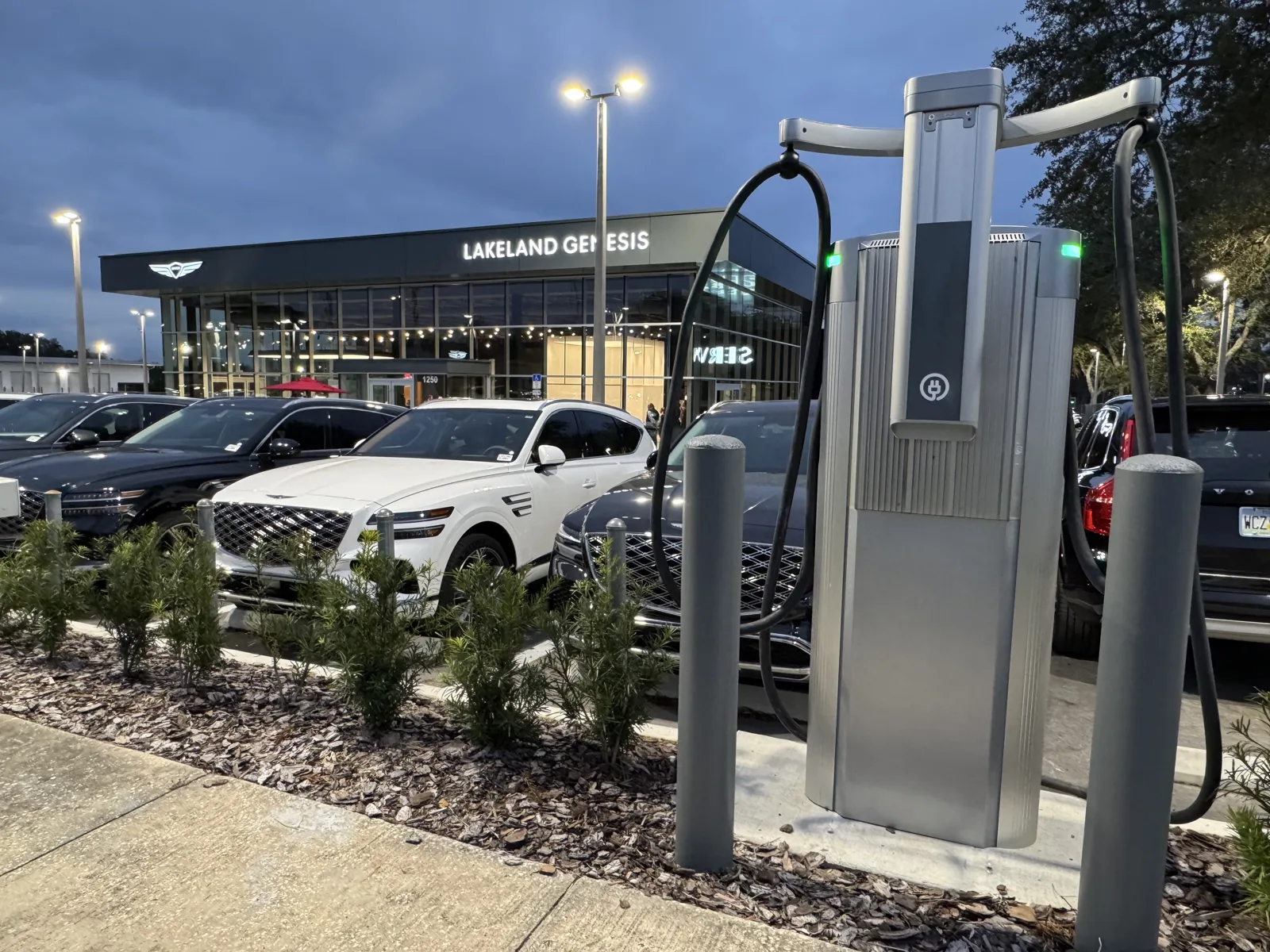
Berger Chevrolet · Grand Rapids, Michigan
Over a single billing period, Energy Guardian managed the dealership's charger load against its base building consumption. Without intervention, the site would have set a peak of 149.8 kW; Guardian held the actual peak to 116.9 kW — cutting its single largest demand event by roughly 75%, while intervening in just 7.1% of the period's intervals and turning away no charging sessions.
A Pre-Summer Checklist
The time to prepare is before the first sustained heat sets the year's peak — typically late spring. A quick audit:
- Find your summer demand rate. Check your tariff for a seasonal split and note the per-kW summer rate.
- Look for a ratchet clause. If your billed demand references a percentage of a prior-months peak, a summer spike will cost you all year.
- Identify your flexible load. EV charging is almost always the largest shapeable load on site — and the biggest lever.
- Confirm load management is configured before June. Guardian should be shaping charging output before the first hot-weather peak, not after the first shocking bill.
For dealerships in particular — where customer and inventory charging both spike during business hours — getting this right before summer is the difference between predictable bills and a demand charge that resets your baseline for the year. See how EVready works with dealerships →
Common Questions
Why are demand charges higher in summer?
Utilities face their highest system-wide load in summer, when air conditioning drives regional electricity demand to its annual peak. To recover the cost of that capacity, many commercial tariffs charge a higher demand rate during summer months — often 40% to 65% more per kW than winter rates. Some utilities also apply higher on-peak demand rates during summer afternoon windows. The result is that the same peak kW draw costs materially more in July than it does in January.
What is a demand ratchet and why does it matter in summer?
A demand ratchet is a tariff provision that sets your billed demand at the greater of your current-month peak or a percentage — often 75% to 95% — of your highest peak over the previous 11 months. Because summer peaks are usually the highest of the year, a single unmanaged spike in July or August can raise the demand floor on every bill for the rest of the year, even in low-usage months. That is why summer peaks are the most expensive ones to get wrong.
Can I lower summer demand charges without turning EV drivers away?
Yes. Active load management shapes EV charging output in real time so the site stays below its demand ceiling during peak windows, without shutting chargers off. Sessions are briefly slowed only when the facility approaches a new peak, and because peaks are short, most sessions still complete within their normal window. Chargers remain available throughout, so drivers are not turned away.
When should a site prepare for summer demand-charge season?
Before the first sustained heat of the season sets the year's peak — typically late spring. Reviewing your utility tariff, identifying your summer demand rate and any ratchet clause, and having load management configured before June ensures the first hot-weather peak does not lock in an inflated demand charge for months. Preparing after the first big bill means living with that peak until the ratchet window rolls off.
Don't let one July afternoon price your whole year. EVready's Playbook maps your summer demand exposure, checks your tariff for a ratchet, and designs Energy Guardian load management to keep your peak down before the heat arrives. Learn how Energy Guardian works →